


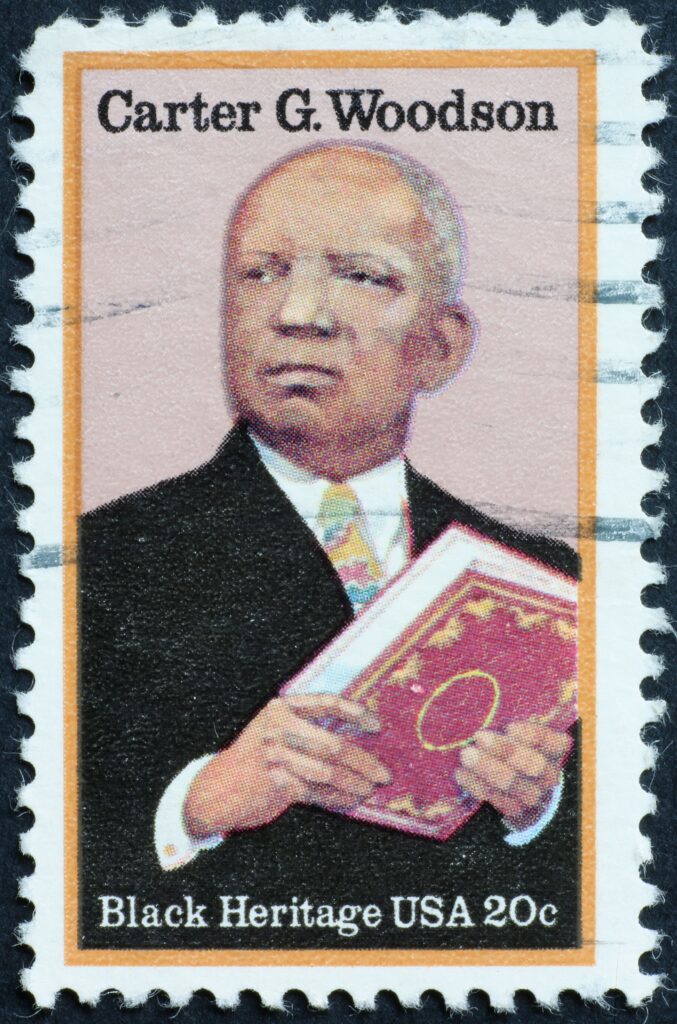
Carter G. Woodson Home
Carter G. Woodson Home is a historic site that preserves the house of the scholar, educator, and historian considered as the ‘father of black history.’
Call Toll-Free 888.796.8763
Email: Groups@GroupToursUSA.com.
Washington DC Tours » Carter G. Woodson Home
Carter G. Woodson Home
The Carter G. Woodson Home is a three-story Italianate brick rowhouse in 1518 Ninth St. NW became the home of Carter G. Woodson for the last 28 years of his life.
Born to enslaved parents and was self-educated until the age of 20 when he got the chance to attend formal schooling, Woodson rose to prominence when he became the second African-American to receive a doctorate from Harvard University. He then used his influence to advance the lives of people of color by pioneering the documentation of the lives and contributions of African-Americans to US history.
He also founded the Association for the Study of Negro Life with his home as the first office. A year later he began to publish the Journal of Negro History, now known as the Journal of African American History. Because of these, Carter G. Woodson became known as the ‘father of African-American history.’ The site now preserves his residence and the original headquarters of the organization he founded.
Request a Customized Tour to Washington DC for your Group
Interesting Facts on the Carter G. Woodson Home and Carter G. Woodson
- Black History Month, celebrated all over the United States every February was founded by Carter G. Woodson.
- Carter G Woodson became the second African-American to receive a doctorate from Harvard University in 1912. He is also the only person whose parents were enslaved in the United States to obtain a Ph.D.
- Woodson spent most of his academic career in Howard University, a historically black university, where he became Dean of the College of Arts and Sciences.
- Woodson pioneered the celebration of “Negro History Week” on the second week of February 1926 coinciding with the birthdays of Abraham Lincoln and Frederick Douglass. This eventually became the “Black History Month” celebrated every February.